SPECIES
Zander on Camera: Underwater Footage Reveals Pike-Perch Behaviour
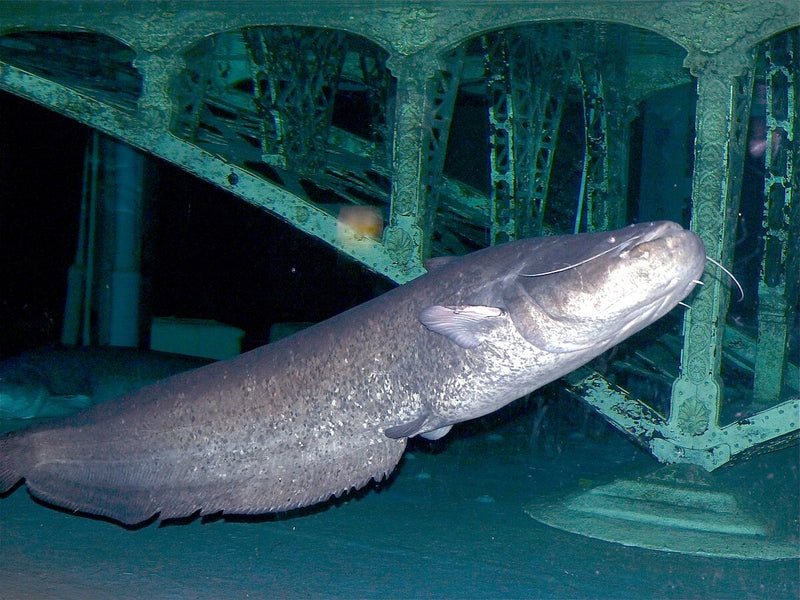
Zander are the most popular predator fish in Europe and arguably the hardest to understand. They live in water you cannot see through, feed at times you cannot fish comfortably, and behave in ways that contradict most of what you read about predator fishing.
KEY TAKEAWAY
Zander are Europe's most elusive predator to film. Their preference for murky water and low light makes the Sony STARVIS sensor and green LED illumination critical - and what the camera reveals about pack hunting behaviour is genuinely surprising.
IN THIS ARTICLE
- Why Zander Are Hard to Film (and Why That Matters)
- What the Camera Reveals About Zander Feeding
- Best Rigs for Filming Zander
- How Low-Light Illumination Matters for Zander
- European Zander Habitat: What the Camera Reveals About Where They Live
- Seasonal Patterns: When to Film Zander
- What Zander Footage Teaches You That You Cannot Learn Otherwise
- A Fish Built for Murky Water
An underwater camera does not solve the mystery entirely. But it pulls back the curtain far enough to change how you approach them.
This is about what an inline underwater camera -- specifically one that works in the low-visibility, low-light conditions where zander actually live -- reveals about pike-perch behaviour in European rivers and lakes. Not theory. What the footage shows.
Why Zander Are Hard to Film (and Why That Matters)
Start with the obvious problem: zander live where you cannot see them.
Their preferred habitat across European rivers and reservoirs is turbid water -- 30 cm to 1 metre of visibility is typical zander territory. They favour soft, silty bottoms in 3 to 10 metres of depth, near structures that break current: bridge pilings, sunken trees, canal walls, dam faces, gravel bars with adjacent deep holes.
They feed most actively at dusk, dawn, and through the night. During bright daylight in clear water, they sit deep and inactive -- often hugging the bottom in tight schools, barely moving.
This combination of murky water and low light makes zander the worst possible subject for underwater filming. A camera that works well for pike in a clear Scandinavian lake may produce nothing but green fog in a German canal or a Latvian reservoir where zander actually live.
What changes the equation: A camera with a sensitive low-light sensor and close-range illumination. The CamX uses a Sony STARVIS 2 MP CMOS sensor (f/2.0, ISO up to 6400) with green LED illumination. The LEDs do not light up the whole river -- nothing will, at 50 cm visibility -- but they illuminate the 1 to 2 metres directly in front of the lens. And since zander approach lures at close range in murky water (they have to, because they cannot see them from further away), that 1 to 2 metres is exactly the zone where the action happens.
The green light is significant. Green wavelengths penetrate turbid water better than white light, and they are less likely to spook fish than a bright white beam [VERIFY: whether green specifically spooks zander less, or whether it is simply better penetration in murky water]. The result is footage that is dark around the edges but clear in the centre -- good enough to see a zander approach, commit, and strike from 50 to 100 cm away.
It is not cinematic. It is functional. And for a species that has been studied less on camera than almost any other European predator, functional footage is a genuine contribution to understanding how these fish behave.
What the Camera Reveals About Zander Feeding
They Are Pack Hunters (More Than You Think)
The biggest surprise from underwater zander footage is how often you see more than one fish. Zander are schooling predators, particularly fish between 40 and 65 cm. When one zander follows your lure, there is a strong chance that two or three others are nearby, just outside the camera's illuminated zone.
On footage from river fishing in the Daugava [VERIFY: appropriate Latvian river reference for zander], you regularly see a zander follow a jig and then a second fish appear from the periphery, often slightly larger, moving to intercept from the side. The first fish then either accelerates to compete or drops back.
What this means for your fishing: When you get a follow or a missed bite from a zander, do not move. Cast again immediately to the same spot. The school is there, and the competition between fish can push a reluctant zander into committing. Many experienced zander anglers know this instinctively -- the camera confirms it and shows why it works.
The Strike Is Subtle, Not Explosive
Pike strike like a car crash. Zander strike like a pickpocket.
On camera, a zander take looks like this: the fish approaches from behind or slightly below the lure, matches its speed (exactly as pike do, but with less deliberation), opens its mouth, and inhales the lure with a sharp forward motion of the head. The body barely moves. The gill covers flare outward as water rushes through. The whole thing takes perhaps a quarter of a second.
What is notably absent is violence. There is no head-turning lunge, no jaw-snapping impact. Zander do not attack lures so much as absorb them. This is why zander bites are famously hard to detect -- on the rod, a zander take often feels like a slight heaviness or a momentary stop, not a hit.
The camera reframes the "missed bite" problem. Anglers frequently complain about zander "biting short" -- feeling a tap but not hooking the fish. Footage shows that in many of these cases, the zander did fully take the lure. The problem is not that the fish missed the hook; it is that the fish ejected the lure faster than the angler could strike. Zander have remarkable ability to inhale and spit out a bait in under a second if the texture or resistance feels wrong.
This is why experienced zander anglers use soft plastic lures with exposed hook points and maintain direct contact with the lure (no slack line) -- the hook needs to find purchase during that brief moment when the lure is inside the mouth.
They Test First, Eat Second
Like pike, zander investigate before committing. But while pike bump lures with their snout, zander use a different method: they follow at extremely close range (10 to 20 cm) and seem to use their lateral line to assess the lure's vibration pattern [VERIFY: whether lateral line assessment at close range is documented for zander specifically].
On camera, this looks like a zander hovering just behind and below the jig, matching every movement for 2 to 5 seconds. The fish is so close that its snout sometimes enters the frame alongside the lure. Then it either commits with that subtle inhalation, or simply stops swimming and lets the lure pull away.
What this teaches you: Vibration matters to zander at least as much as visual profile. In murky water, they may locate your lure by vibration from several metres away and then close in visually for the final approach. Lures with strong vibration patterns (paddle-tail shads, vibrating jig heads) draw more follows in the footage than slender finesse lures, even though both catch fish once the zander is close.
Best Rigs for Filming Zander
Jig Head (The Standard)
The jig head is the default zander method across Europe for good reason -- it keeps the lure near the bottom where zander feed, and the hopping action triggers follows.
Camera setup: Rig the camera inline, 40 to 60 cm above the jig. The camera points downward and forward, capturing the jig as it hops along the bottom.
What the footage shows: Jig fishing produces the most zander interactions per hour on camera. The hop-and-pause action is key -- zander almost always approach during the pause, when the jig is sinking back to the bottom. On footage, you see the jig lift, the camera swings slightly upward, and then as the jig sinks back, a shape appears behind it, already within striking range.
Tip: Keep your pauses long. The camera consistently shows that zander need 2 to 4 seconds of pause to commit. Anglers who hop-hop-hop with short pauses get follows but not strikes. Let the jig sit on the bottom for a full 3-count.
Drop Shot
Drop shot rigs keep the lure suspended off the bottom at a fixed height -- exactly where zander often cruise in mid-water, 30 to 80 cm above the silt.
Camera setup: Mount the camera above the drop shot weight, so it looks up and forward at the suspended lure. This is an unusual angle -- the camera is below the action -- but it captures the zander's approach from the side or above, which is how they attack suspended prey.
What the footage shows: Zander take drop shot lures with more confidence than jig lures. The theory is that a stationary, subtly-twitching lure suspended in mid-water looks like an easy, injured prey item, while a hopping jig looks more like something that might escape. On camera, zander approach drop shot presentations with less hesitation and the follow-to-strike conversion is noticeably higher.
Dead Bait (Tipped or Static)
In many parts of Eastern Europe and the Baltics, zander fishing with dead bait -- a small roach, smelt, or bleak on a simple hook rig -- is the traditional method and still highly effective.
Camera setup: Float rig with the camera 30 to 40 cm above the bait, looking downward. The static nature of this setup produces the calmest, clearest footage.
What the footage shows: Zander approach dead bait in a distinctive pattern. They circle. Unlike pike, which approach from one direction and commit, zander frequently circle the bait at a distance of 30 to 50 cm, sometimes making two or three passes before moving in. On camera, you see the fish appear on one side of the frame, drift across, disappear off the other side, and then reappear from a different angle 10 to 15 seconds later.
This circling behaviour explains why static dead-bait anglers need patience. The conventional advice -- "give the zander time to turn the bait before striking" -- takes on new meaning when you see on camera that the fish has been circling for 30 seconds before it even picks the bait up.
How Low-Light Illumination Matters for Zander
Zander have large, reflective eyes evolved for feeding in low light. This is not a minor adaptation -- it is the defining feature of the species and the reason they dominate the nocturnal predator niche across European fresh waters.
For camera work, this creates an interesting dynamic: the camera's green LEDs illuminate the water in front of the lens, and zander eyes reflect that light back. On footage, the first sign of a zander approaching is often two bright points of reflected light appearing in the murk. These are the eyes, catching the LED illumination at distance, visible 1 to 2 metres before the body of the fish resolves.
This reflective-eye effect is unique to zander among European predators. Pike eyes do not reflect this way. Perch eyes reflect faintly. But zander eyes glow on camera -- and in dark or murky water, this is often how you spot them.
Practical note on illumination settings: The CamX's green LEDs can be controlled through the CanFish app (brightness levels). For zander fishing in typical European turbid water (50 cm to 1 m visibility), use medium illumination. Full power in very murky water creates a wall of backscatter -- the light reflects off suspended particles and whites out the frame. Medium illumination reaches 50 to 80 cm, which is all you need when zander are approaching at close range.
In clearer water (canal sections, reservoirs with better visibility), reduce the illumination further or turn it off if there is enough ambient light. Zander are warier in clear water, and any unusual light source may push them away [VERIFY: whether LED illumination specifically spooks zander in clear conditions, or whether this is general predator caution].
European Zander Habitat: What the Camera Reveals About Where They Live
Rivers: Current Breaks and Soft Bottoms
Camera footage from European river zander fishing consistently shows the same habitat features in the background: silty or sandy bottom, low current (the fish are always behind structures that break the main flow), and surprisingly little vegetation. Zander are not weed-edge predators like pike. They prefer open, soft-bottomed areas where their camouflage -- mottled olive-brown flanks -- works best.
When you drop a camera into a known zander spot on a river like the Elbe, the Danube, or the Daugava, the footage typically shows a featureless silt bottom with occasional debris. It looks unpromising. But wait, and the zander appear from the edges of the frame, materialising from what seemed like empty water.
What this teaches you: Trust your electronics (sonar) and local knowledge over what the water looks like from above. Zander water often looks dead -- no features, no weed, murky. The camera confirms that the fish are there; they are just invisible from the surface.
Lakes and Reservoirs: Deep Flats and Drop-Offs
In European reservoirs (common in Germany, Czechia, Poland, the Baltics), zander hold on deep flats adjacent to drop-offs during the day and move shallow to feed at dusk and dawn.
Camera footage from reservoir zander fishing shows two distinct behaviours depending on time of day:
- Daytime: The camera captures tight schools of zander holding stationary near the bottom in 6 to 12 metres of depth. The fish are stacked, sometimes with less than a body length between them. They barely react to lures during bright daylight. You may retrieve a jig through the middle of a school and get zero responses.
- Dusk transition: The schools break up. Individual fish or pairs begin cruising the drop-off edge, moving shallower. Activity increases sharply. Follow rates on the camera jump from near zero to multiple fish per 10 minutes.
Canals: Urban Zander Hotspots
European canals -- Amsterdam, Berlin, Hamburg, Riga -- hold surprising zander populations. Canal zander are smaller on average but numerous, and the confined, turbid water makes camera work both challenging and rewarding.
The camera shows that canal zander relate heavily to hard structure: stone walls, lock gates, bridge pilings, moored boat hulls. Unlike river or reservoir zander that roam flats, canal fish often hold within a metre of a vertical structure and ambush from it.
Footage from canal sessions shows zander appearing from behind walls and under boats with very little warning -- they are already at striking distance when they enter the camera's illuminated zone. This explains why canal zander bites often feel like an instant hit with no preceding follow. In the confined space with no room for a long approach, the fish goes from hidden to striking in under a second.
Seasonal Patterns: When to Film Zander
Autumn (October to November): Prime Season
Water temperatures drop below 15 degrees C and zander feed intensively. Visibility in many European waters improves as algae die back. This is the best window for both catching and filming zander -- active fish, reasonable visibility, feeding sessions that last for hours rather than minutes.
Spring (April to May): Pre-Spawn and Post-Spawn
Zander move shallow before spawning [VERIFY: exact timing varies by latitude -- Central Europe roughly April, Scandinavia/Baltics May]. Pre-spawn fish are aggressive and feed in shallower, sometimes clearer water than usual. Post-spawn males guard nests and will attack anything that approaches, including your camera. The footage of a nest-guarding male zander charging a camera is striking -- raw aggression with no feeding intent.
Note: In many EU countries, zander have closed seasons during spawning. Check local regulations before fishing. Filming nest-guarding behaviour without fishing may still disturb spawning [VERIFY: whether presence of camera near nests constitutes disturbance under local conservation rules].
Summer: Nights Only
Summer zander fishing is a night game across most of Europe. The camera's low-light capability with green LED illumination becomes essential. Daytime footage in summer typically shows empty water or inactive fish -- the real action starts after sunset.
Winter: Slow but Possible
Zander slow down dramatically in cold water (below 5 degrees C) but do not stop feeding entirely. Winter footage shows extremely slow follows -- a zander may track your jig for 10 to 15 seconds before committing. Slow your retrieve accordingly. In countries where ice fishing for zander is practised [VERIFY: legal status in Baltics, Scandinavia], vertical camera drops through ice holes can capture extraordinary footage of zander schools holding deep.
What Zander Footage Teaches You That You Cannot Learn Otherwise
- Zander school tighter than you think. Where there is one, there are usually more within 10 metres. Do not abandon a spot after one fish.
- The pause is everything. Zander take during the pause, not during the action. The camera shows them closing distance during the pause and braking during the hop. Make your pauses longer than feels comfortable.
- They are nocturnal for a reason. Daytime zander footage in typical habitats is often boring -- inactive fish or empty water. The same spot at dusk becomes a different place. Plan around this.
- Vibration draws them in, visual triggers the strike. In murky water, zander locate lures by vibration (lateral line) from distance and switch to visual confirmation at close range. Use lures that vibrate strongly but also have a visible profile -- paddle tails and curly tails over straight worms.
- The eyes always give them away. That double pinpoint of reflected green light in the murk is a zander, every time. Once you recognise it on footage, you start looking for it, and you realise there were fish present on retrieves where you thought the water was empty.
- Soft plastic converts better than hard. On footage, zander hold soft plastic lures in their mouth 2 to 3 times longer than hard lures before ejecting. That extra fraction of a second is often the difference between a hooked fish and a "missed bite."
A Fish Built for Murky Water
There is a reason zander have colonised every major European river system and most of its reservoirs. They are supremely adapted to the turbid, deep, low-light environments that make up most of Europe's fresh water. They are not glamorous in the way that trout or salmon are, and they do not fight with the violence of a pike. But they are smart, cautious, perfectly camouflaged, and consistently difficult to outwit.
An underwater camera in zander water is a humbling experience. You realise how many fish were there that you never detected. You realise how often they inspected and rejected your lure. And you realise that the anglers who catch zander consistently are not just lucky -- they have understood, through years of experience, what the camera now shows you in a single session.
RELATED READING
Further reading: Zander/Pike-perch (Wikipedia) · European freshwater fish species
Frequently Asked Questions
Can you film zander underwater in murky water?
Yes - zander actively prefer murky water, which is where the Sony STARVIS sensor and green LED illumination become essential. You won't get crystal-clear footage, but you'll capture behaviour that's never been documented in most European waters.
Do zander hunt in packs?
Camera footage suggests zander frequently hunt in loose groups of 3-8 fish, particularly in river systems. This contradicts the common assumption that zander are solitary ambush predators.
What lures do zander respond to on camera?
Camera footage shows zander respond most consistently to subtle, slow-moving presentations - soft plastics on jig heads, slow-sinking stickbaits, and dead baits. Aggressive, fast-moving lures often trigger follows but fewer commitments.
ABOUT THE AUTHOR
Written by the Fisho Team - a small crew of anglers based in Riga, Latvia. We test, review, and stock the gear we actually use on the water.
Disclosure: Fisho.eu is an authorized European distributor of the CanFish CamX. Some links in this article point to our product page. We only recommend gear we've personally tested.
The CanFish CamX's Sony STARVIS sensor and green LED illumination are built for the low-light, turbid water where zander live. See it at Fisho.eu --> -- EUR 189, free EU shipping.