FIELD NOTES
Baltic Sea Cod and Seatrout: What a Camera Shows You Offshore
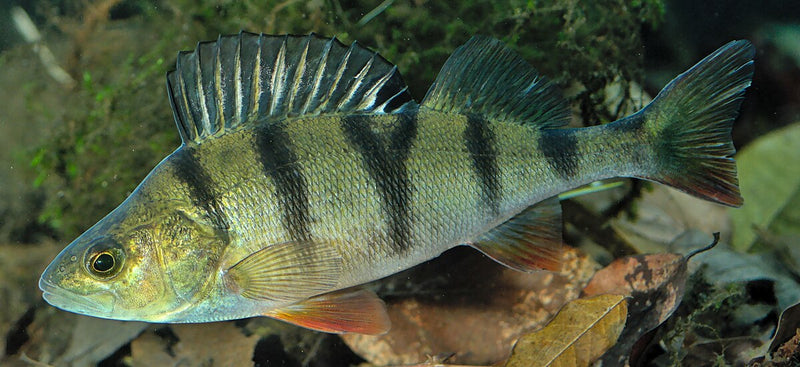
The Baltic is a strange sea. It's too cold and too fresh to be a proper sea, and too big and too salty to be a lake. Salinity sits around 7 parts per thousand in the central basin — about a fifth of the Atlantic — which means the species list looks half-freshwater and half-marine. Cod share the water with pike. Seatrout spawn in rivers that flow into brackish bays where you can also catch perch. It's its own thing.
And for the coastal angler fishing from Rügen to Bornholm to the Stockholm archipelago to the Gulf of Gdańsk, an underwater camera behaves differently out here than it does on a Nordic lake or a German reservoir. This post is about what you actually get — and what you don't — when you lower a lens into Baltic water.
Baltic visibility, season by season
The Baltic has a visibility problem that changes dramatically through the year. Summer brings cyanobacteria blooms — you've probably seen the satellite images of green swirls across the whole sea in July and August. Spring and autumn are cleaner. Winter, where ice doesn't cover, is the clearest.
| Season | Typical surface viz | Camera at 5-15m |
|---|---|---|
| Late winter / early spring (Feb–Apr) | 4–8 m | Strong. Best clarity of the year. |
| Late spring (May–Jun) | 3–6 m | Good, deteriorating. |
| Mid summer (Jul–Aug) | 1–3 m (worse in blooms) | Limited. Algae scatters light. |
| Early autumn (Sep–Oct) | 3–6 m | Recovering. Good again. |
| Late autumn (Nov–Dec) | 4–8 m | Strong if no storm churn. |
The takeaway: if you planned to use a camera once a year on your family trip to Bornholm in August, you might be disappointed. If you run a small-boat programme through spring, autumn, and winter out of Ustka, Klaipėda, Ystad, or Saßnitz, this gear class earns its keep.
Cod: a species in collapse, and what the camera reveals
Baltic cod (Gadus morhua) has been in steep decline for over a decade. The Western Baltic stock is under severe pressure, and recreational quotas have tightened repeatedly through the 2020s. Anyone fishing for cod needs to know the current national and EU rules — this is not the post for those; check your local authority before every trip.
But if you are fishing cod legally, a camera changes how you read the bottom. Cod in the Baltic live around:
- Reef edges in 15–40m (southern Baltic).
- Rocky outcrops and mussel beds along the German and Danish coasts.
- Wrecks — the Baltic has hundreds of WWII wrecks that hold fish.
- Drop-offs into the deeper basins (Bornholm Deep, Gdańsk Deep, Arkona Basin).
The CanFish CamX is rated to 200m, so the depth envelope is not the issue. The issue is light. Below 15m in the Baltic, ambient light drops fast in summer due to the surface bloom; in winter and early spring, clearer water lets useful light penetrate to 20m or more. On camera, what you'll see at 25m in February looks like a dusk forest. At 25m in August, you'll see nothing without the onboard LEDs, and even with LEDs you're looking at a 30–80cm sphere of illuminated water.
"We drop a camera ahead of our cod rig and let it record while we jig. Back on shore we play the footage. Three times last October we saw cod approach, mouth the lure, spit it out. We changed colour the next trip. That's information you can't get any other way." — Customer feedback, small-boat angler based out of Sassnitz
Seatrout: the camera's best Baltic story
Seatrout (anadromous Salmo trutta) are, for many Scandinavian and Baltic anglers, the reason they fish the coast at all. Shore-caught seatrout along the Danish and Swedish coasts, fly-caught seatrout off the German beach at Sylt or the Polish coast near Mielno — it's a culture in itself.
And this is where a camera genuinely shifts your understanding. Because seatrout hunt in very shallow water (0.5–3m) along sandy and stony shorelines, often in visibility that's surprisingly good — the cold, the shallow wave-mixed water, and the hunting fish all benefit the camera.
Positioned correctly — either rigged on a weighted stake a metre off the bottom, or lowered from a boat drifting over known holding lanes — a camera shows you:
- Whether fish are in the zone at all. This is 80% of the value.
- How they respond to different fly patterns. Refusals, follows, and takes all look different on camera.
- What else is in the water. Flounder, garfish, small cod, the occasional wrasse — context that changes how you fish.
- Bottom composition. Seatrout prefer stony bottoms; you can see exactly where the sand ends.
Where a Baltic camera is less useful
Let's be honest about limitations:
- Mid-summer bloom water. July and August in many bays looks like pea soup. A camera at 3m sees half a metre. It's not a disaster, but it's not transformative either. Plan your camera days around clearer windows.
- Trolling. The CamX is a drop-and-record tool, not a trolling camera. You can run it on a short dropper off a downrigger in calm water, but it's not what it's optimised for. Fast-moving water in front of the lens scatters light and the 136° wide-angle picks up more water column than fish detail.
- Deep cod fishing during summer. Combine reduced light with summer turbidity and you're relying on LEDs alone past 15m. The LED range is short (call it half a metre of clear illumination). Fine for confirming a fish is at the rig. Not fine for reading the wider bottom.
Baltic-specific gear notes
The Baltic is not a tough sea for camera electronics on paper, but salinity at 7 ppt is still saline enough to corrode cheap gear over a season. Three rules:
- Rinse with fresh water after every trip. Not a deep clean — just a hose-down of the camera body, lanyard ring, and charging port. Salt crust is the enemy of any connector.
- Dry the charging port fully before charging. USB-C ports on small-electronics cameras do not like salt and moisture. A quick blow-out and a towel wipe is enough. The CamX has a sealed compartment but the charging port itself needs attention.
- Store in a dry box out of season. Baltic boats and garages in winter are humid. A sealed box with a silica sachet keeps the camera in shape for next spring.
A realistic Baltic use-case
You run out of a small harbour somewhere on the southern Baltic coast in mid-May. Water is 8°C, visibility is 5m. You drift over a stony edge in 8m of water looking for seatrout. One rod in, one camera down, phone in a chest pocket — you don't watch the screen live, you just let it record. After 40 minutes you pull up, watch the playback on the drive home. You see:
- Two seatrout in the 60cm class cruising through the zone.
- A couple of flounder on the sand edge.
- Your own lure swimming through the frame three times.
- One fish following the lure to within 2m, refusing, and peeling off.
Did the camera catch the fish? No. But the next week, you change your lure colour from silver to a copper-sand pattern because the refusal told you something, and you land two. That's the feedback loop a camera makes possible in Baltic conditions.
Regional note from Riga
Fisho is based in Riga, on the eastern Baltic, so this is our home sea. We ship the CanFish CamX across the EU from our Latvian warehouse via Omniva and DPD. Baltic-bordering customers — Sweden, Denmark, Germany, Poland, Finland, Estonia, Lithuania — typically see delivery in 2–4 working days. VAT is included; there are no import charges inside the EU.
If you fish the Baltic regularly, plan your camera seasons: spring and autumn are your windows. Summer can work in the right bays. Winter, where the water is open, is often the sharpest visibility of the year. Use that.