FIELD NOTES
Latvian Rivers: Bream, Zander, and What the Water Shows You
Fisho is a small crew based in Riga, on the lower Daugava. This is our home water. When we started stocking the CanFish CamX for EU customers, the first place we tested it was five kilometres from the warehouse — a slow bend in the Daugava where local anglers have fished bream and zander since before the Soviet era.
This post is about Latvian river fishing specifically, because it's what we know best. If you fish the Daugava, the Gauja, the Lielupe, the Venta, or any of the smaller eastern Latvian rivers like the Aiviekste or the Bērze, the observations here should apply directly. For neighbouring Lithuanian and Estonian river systems, most of it transfers — the water dynamics are similar across the Baltic states.
Latvian rivers at a glance
Latvia is a river country. Eleven major river systems drain into the Gulf of Riga and the central Baltic, plus dozens of secondary rivers. For the angler, a few things define the fishing:
- Seasonal flow changes. Spring flood (April–May, "plūdi") pushes water high and turbid. Summer low-flow clears things up. Autumn rains add colour back. Winter ice covers most of the river network from December to March.
- Mixed bottom. Sand, gravel, clay, and stony riffles depending on location. Upper Gauja is stony and fast; the lower Daugava near Riga is slow, wide, and silty.
- Species range. Bream (Abramis brama), zander / pike-perch (Sander lucioperca), pike (Esox lucius), perch (Perca fluviatilis), roach (Rutilus rutilus), asp (Leuciscus aspius) in fast water, ide (Leuciscus idus), and migratory salmon and seatrout in the Gauja and Daugava systems under regulatory protection.
- Visibility. Highly variable. Typical summer clarity is 1–3m in the main Daugava, 2–4m in the Gauja, and can drop below 50cm after heavy rain or during peak spring melt.
Bream: the camera's unsung Latvian story
Bream fishing is a foundational Latvian tradition. A bream over 3kg is a lifetime fish for many anglers, and the rivers here produce them consistently — especially in the summer months on the slow lower sections of the Daugava, Lielupe, and Gauja.
Why a camera helps with bream:
- Bream feed in schools. Where there is one, there are usually twenty. A camera confirms presence in minutes.
- Bream are suction feeders. On camera you'll see the vacuum behaviour — a bream approaches a bait, tilts nose-down, and inhales. Miss the bite and they move on.
- Bream rarely rush. They cruise slowly, often in clear formations. The camera captures this better than any other gear.
- Local bottom composition matters. Bream prefer specific bottom types. Watching footage of a spot over three sessions tells you exactly what the bottom is and whether it's right.
In practical terms: bait a swim, lower the camera 2–3m upstream of the groundbait, let it record for 30 minutes. If bream come in, you'll see a dark school shape enter the frame and work the baited area. If only roach arrive, you know your groundbait is wrong for the day.
Zander: the reason many Latvians buy a camera
Zander (in Latvian: "zandarts") is the predator with cult status in this country. A big river zander — 70cm+ — is a trophy. They're also the hardest freshwater predator to pattern, because they hunt in windows and change depth constantly with light levels.
Here's where a camera genuinely transforms your zander fishing:
- Dawn and dusk hunting. Zander feed at low light. Drop a camera into a known zander channel at 20:00 in July and record the dusk window. Playback tells you exactly when the fish moved in — 20:40, 21:05, whenever it was — and you can plan next session's timing to that minute.
- Depth preference. Zander hold at specific depths on specific nights. A camera at 4m vs 6m reveals whether they're patrolling the channel edge or the deeper trough.
- Response to lure colour. Zander show classic refusal behaviour on camera — following 1–2m, turning away. You can literally see them decide.
"I'd fished the same stretch of the Daugava for eleven years. Three sessions with a camera taught me that zander hit my spot at exactly 21:30, not earlier, not later, on July nights. Before the camera I'd arrive at 19:00 and pack up at 21:00 because nothing had happened. I was leaving half an hour before they showed up." — Customer, Riga, August 2025
Pike and perch: the supporting cast
Pike are present throughout the Latvian river system but less pursued than zander or bream. They hold in slack-water pockets off the main current — reed beds, fallen trees, oxbows. A camera dropped into one of these pockets shows you whether a pike is in residence. In summer, pike are often inactive in warm main-channel water and retreat to these cooler micro-habitats.
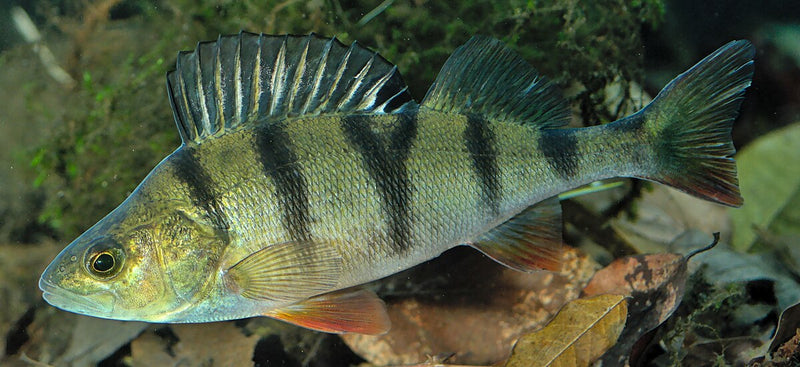
Perch in Latvian rivers school heavily around structure — bridge pilings, fallen trees, riprap. On camera, perch schools are some of the easiest fish to identify, and you can see the school hierarchy (bigger fish lower and deeper in the pack).
Visibility month by month on the Daugava
| Month | Typical clarity | Camera utility |
|---|---|---|
| January–February (under ice) | 2–4 m | Excellent where ice fishable |
| March (late ice) | 1.5–3 m | Good |
| April (spring flood) | 0.2–0.8 m | Very limited. Melt turbidity. |
| May | 0.5–1.5 m | Marginal. Clearing. |
| June | 1.5–3 m | Good. |
| July–August | 2–4 m | Best of the open-water year. |
| September | 1.5–3 m | Good. |
| October–November | 1–2 m | Fair. Autumn rains colour the water. |
| December (pre-ice) | 1.5–3 m | Good if not yet frozen. |
The honest reading of this table: the Daugava gives you a solid camera season from June to October, an excellent ice camera season from late December to March (where ice is safe and permitted), and a dead window from late March through mid-May when meltwater runs the river brown.
The Gauja: Latvia's clearest river water
The upper and middle Gauja — the stretch through the Gauja National Park — has noticeably better clarity than the Daugava. Stony bottom, faster flow, less agricultural runoff. Summer visibility can reach 4m+ in the right stretches.
This is salmon and seatrout water. Those species are under strict regulation in Latvia, and any camera use near spawning grounds should follow park rules carefully. But for trout, grayling (in the upper reaches), and resident river species, the Gauja is excellent camera country.
A typical Daugava camera session
It's mid-July, water temp 19°C, visibility about 3m. You park at a familiar lay-by south of Riga, walk 200m to a bend where the river slows into a 4m-deep pool. Here's the routine:
- Cast out your main rod with dead bait for zander or ledger rig for bream.
- Weight the camera with 120g of lead, drop it about 1.5m off the bait.
- Camera on, phone clipped to a rod holder, session starts.
- Over the next hour you'll see either activity or nothing. Both are useful.
- Pack up, drive home, review footage. Note what you learned for next trip.
Over a summer of doing this, you'll have a library of your home water that no sonar or guidebook can give you. You'll know which bends hold bream schools in July but go empty in September. You'll know that the inside of one particular curve gets zander at 21:30 and another at 22:15. That's what this gear delivers.
Where a camera won't save you on Latvian water
Be honest:
- Spring flood. Useless in April. Go fishing anyway — the fish still feed — but don't bother with the camera until viz returns.
- Fast riffle sections. Camera in current doesn't work well. Stick to pools and slack water.
- Remote bank fishing in thick reed. Hard to position the camera where you want it. Boat or wading access only.
- Lure fishing on the move. A camera is for static or semi-static use. Not for mobile bank walking.
Regional note from Riga
We stock and ship the CanFish CamX out of our Riga warehouse. For Latvian customers, that usually means next-day delivery via Omniva or a courier drop within 48 hours. There's no import charge, no customs drama, no waiting for packages from China or North America. It's in the warehouse ten minutes from the river, and if something's wrong with your unit you can write to us in Latvian, Russian, or English and talk to a real person.
We built Fisho because we fish these rivers. The gear we stock is the gear we use. The Daugava doesn't care about your marketing; it only cares whether the camera works in 3m of brownish summer water. It does. And over time, it quietly teaches you what you never knew was down there.